

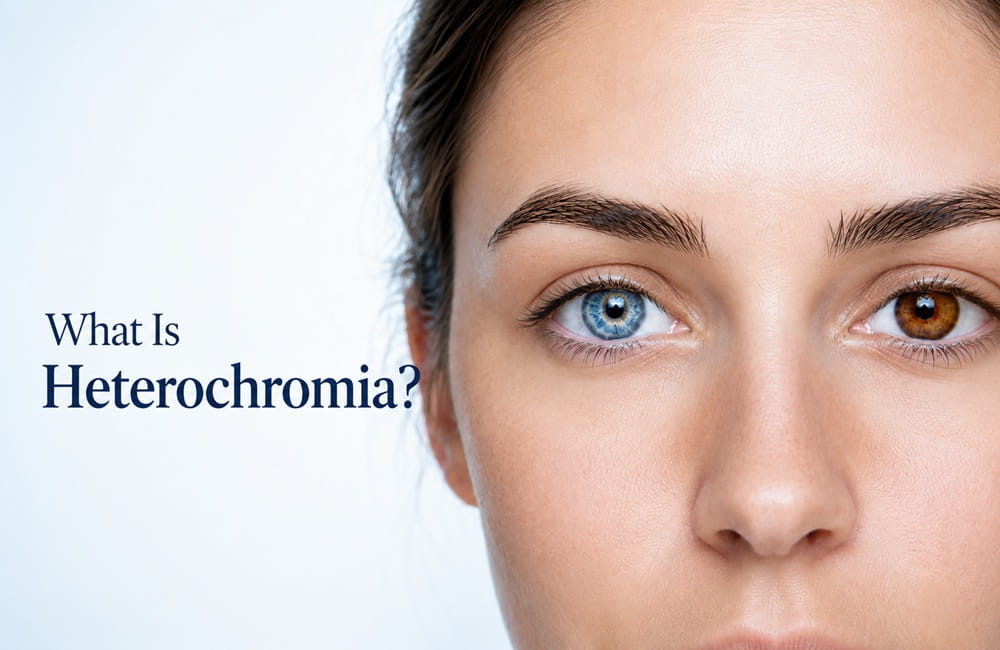
Heterochromia is a difference in eye color between the two eyes or between different areas of the same iris. A person may have two different colored eyes, such as one blue and one brown, or two distinct colors within a single eye.
When present from birth and stable over time, heterochromia often represents a benign variation in iris pigmentation and does not itself affect vision.
However, a new or noticeable change in the color of one eye—especially during adulthood—is different. Changes that develop later in life can sometimes be associated with eye injury, inflammation, medication or another ocular condition and should be evaluated by an ophthalmologist.
What Is Heterochromia?
The iris is the colored part of the eye. Its appearance is influenced largely by the amount and distribution of melanin.
In general, greater amounts of melanin are associated with darker eye colors, while lower amounts contribute to lighter shades such as blue, gray or green. Differences in how this pigment develops or is distributed can create visible variations in eye color.
Heterochromia may affect:
- the two eyes differently;
- one specific section of an iris;
- or the area immediately surrounding the pupil.
Heterochromia is therefore primarily a description of an iris pigmentation pattern rather than a disease by itself.
What Are the Different Types of Heterochromia?
There are three main patterns.
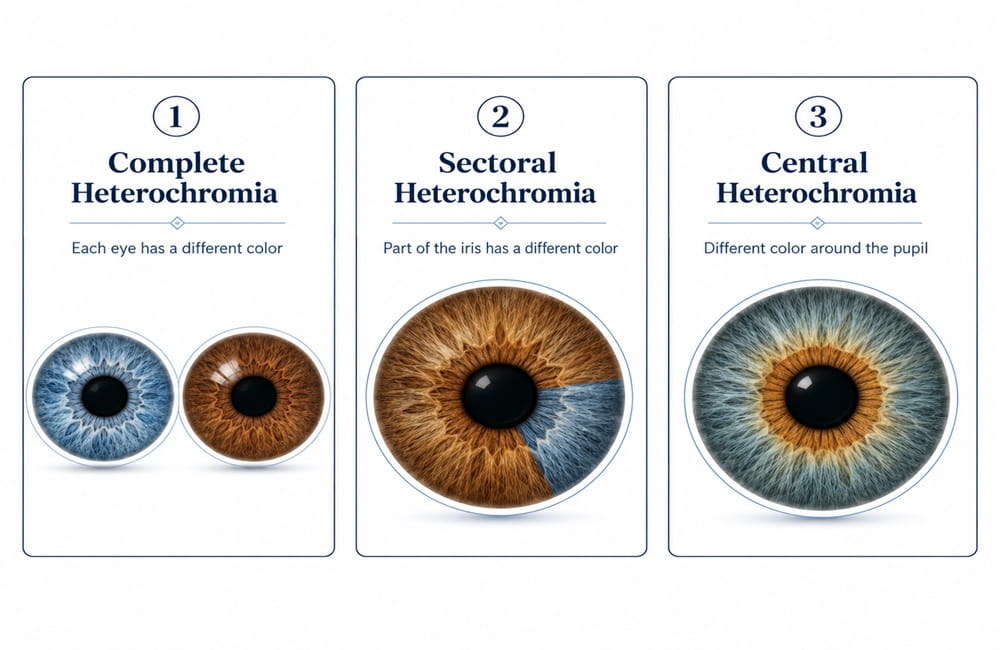
Complete Heterochromia
Complete heterochromia occurs when the two irises have distinctly different colors.
For example:
One blue eye and one brown eye.
This is the classic appearance most people associate with heterochromia.
Sectoral Heterochromia
Sectoral heterochromia, also called partial heterochromia, means that only one section of an iris differs in color from the rest.
For example, a green iris may contain a clearly defined brown segment.
Central Heterochromia
Central heterochromia occurs when the color surrounding the pupil differs from the outer portion of the iris.
A common appearance is a brown or amber ring near the pupil with a green or blue outer iris.
The key difference is:
- Sectoral heterochromia: a segment or slice of the iris has a different color.
- Central heterochromia: the different color forms a ring around the pupil.
What Causes Heterochromia?
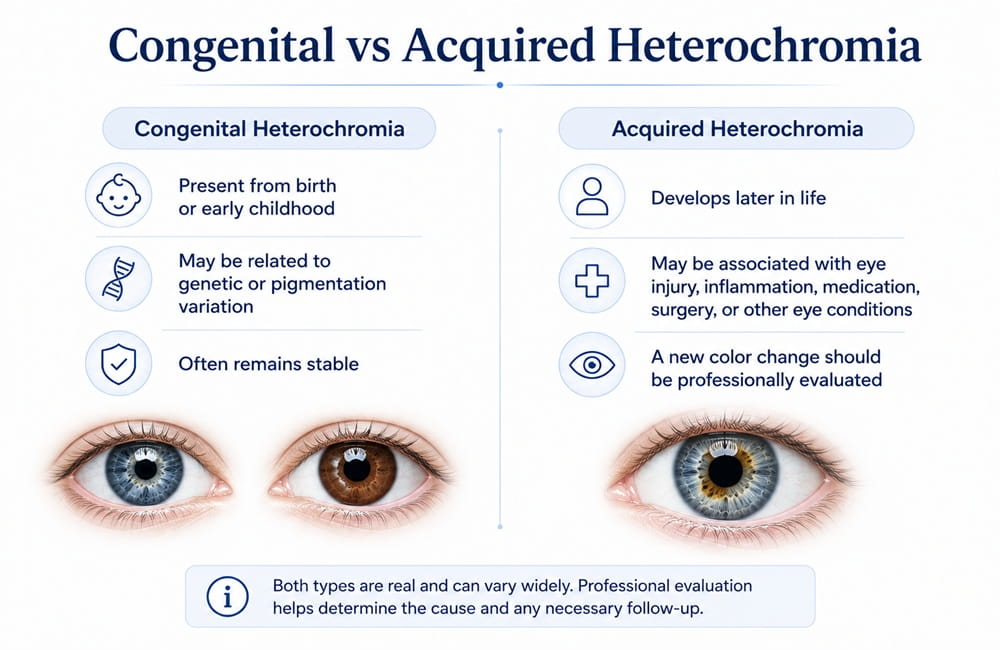
Heterochromia is usually classified as either congenital or acquired.
Congenital Heterochromia
Congenital heterochromia is present from birth or becomes noticeable during early childhood.
It may result from normal genetic variation or differences in the way pigment develops within the iris. Some uncommon genetic or developmental conditions can also include heterochromia as one of their features.
However, being born with different colored eyes does not automatically mean that a person has a medical condition. Many cases occur as an isolated pigmentation difference.
Acquired Heterochromia
Acquired heterochromia develops later in life.
Possible causes include:
- eye injury or trauma;
- inflammation inside the eye;
- certain eye diseases;
- some medications;
- previous eye surgery;
- or damage involving structures that influence iris pigmentation.
Not every apparent eye-color change represents true heterochromia. For example, corneal scarring, swelling or opacity can sometimes make an eye look different in color even when the pigmentation of the iris itself has not changed.
This is one reason a new color difference should be examined rather than diagnosed from appearance alone.
Is Heterochromia Genetic?
It can be, but not all cases of heterochromia are inherited.
Eye color is influenced by multiple genes, and variations in these genes can affect the amount and distribution of pigment in the iris.
Some people have inherited pigmentation patterns that produce heterochromia, while others develop congenital heterochromia despite having no obvious family history.
Acquired heterochromia, on the other hand, develops because of changes occurring later in life.
Is Heterochromia Rare?
Heterochromia is considered uncommon.
Reliable population-wide prevalence data are limited, and its frequency can vary depending on how heterochromia is defined and which population is being studied. For this reason, it is more accurate to describe the condition as uncommon rather than assign a universal percentage.
Is Heterochromia Dangerous?
Heterochromia itself is not necessarily dangerous.
If a difference in eye color has been present since childhood and the eyes are otherwise healthy, it may simply represent a natural pigmentation variation.
A new or changing eye color, especially in adulthood, deserves more attention.
An ophthalmic examination is particularly advisable if the color difference appears together with:
- eye pain;
- redness;
- changes in vision;
- sensitivity to light;
- recent eye injury;
- a noticeable difference in pupil size;
- or new eyelid drooping.
These findings do not identify the cause by themselves, but they make professional evaluation more important.
In children, heterochromia is often an isolated congenital feature. However, if it has never been evaluated—particularly when accompanied by unequal pupil size, eyelid drooping or visual symptoms—an eye examination is appropriate.
Can Eye Color Change Naturally Over Time?
Eye color can sometimes appear to change without a true change in pigmentation.
Lighting, pupil size, clothing, surrounding colors and reflections can make different tones within the iris appear more prominent. Eye color can also develop during early childhood as pigmentation increases.
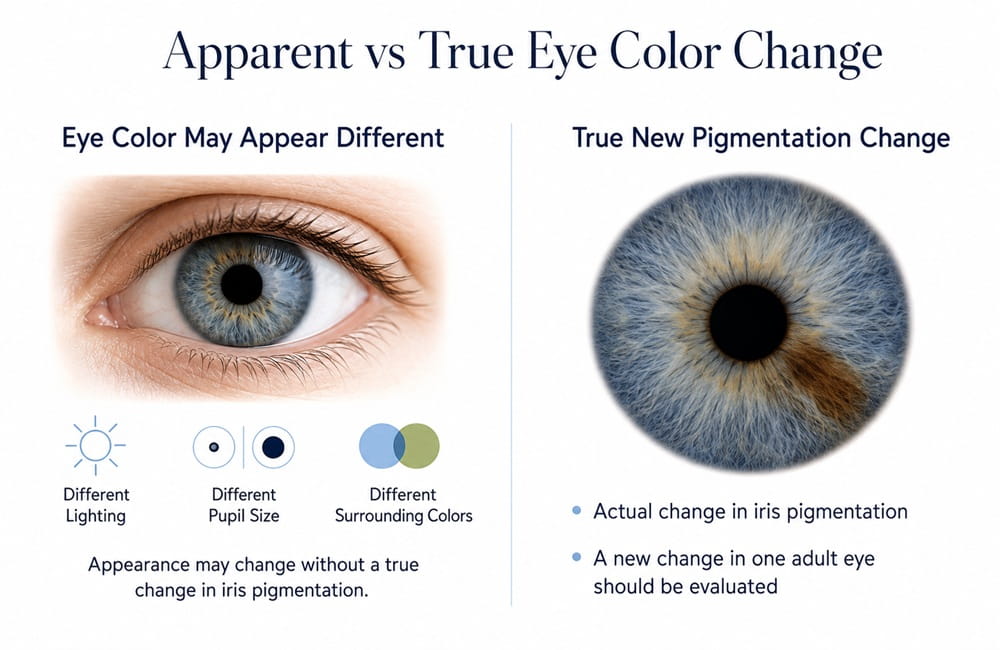
In adults, a true new change in iris pigmentation is not considered a normal effect of lighting or pupil size.
A genuine new pigmentation change in one adult eye is different and should be evaluated.
When it is unclear whether a color difference is new, older photographs can sometimes help establish whether the appearance has been present for years or developed more recently.
Heterochromia vs Naturally Different Eye Shades
| Condition | Description |
| Complete heterochromia | Each eye has a distinctly different color |
| Sectoral heterochromia | A section of one iris has a different color |
| Central heterochromia | A different-colored ring appears around the pupil |
| Normal eye color variation | Subtle differences in appearance related to pigmentation, lighting or iris patterns |
Can Heterochromia Be Created or Changed?
Some people naturally have heterochromia, while others may be interested in intentionally changing the visible appearance of their eye color for cosmetic reasons.
Naturally occurring heterochromia and cosmetic eye color procedures are separate topics. Cosmetic treatment requires individual examination and assessment of eye health.
People interested in changing their eye color may explore cosmetic options separately. One such approach is [keratopigmentation for cosmetic eye color change], which requires individual ophthalmic assessment.
The procedure, eligibility criteria and potential risks are covered separately on our Keratopigmentation service page rather than in this article.
Frequently Asked Questions
Yes. Congenital heterochromia may be present from birth or become noticeable during childhood. In many cases, it is simply an isolated pigmentation difference.
Can heterochromia develop later in life?
Yes. Acquired heterochromia may develop after eye injury, inflammation, certain diseases, medications or ocular procedures. A new eye-color difference should be professionally evaluated.
Usually not. The pigmentation difference itself typically does not affect vision, although some underlying causes of acquired heterochromia can affect eye health.
Yes, especially if the change is new or occurs with pain, redness, light sensitivity, vision changes, unequal pupils, eyelid drooping or recent eye injury.