
What Really Works And What’s Dangerous
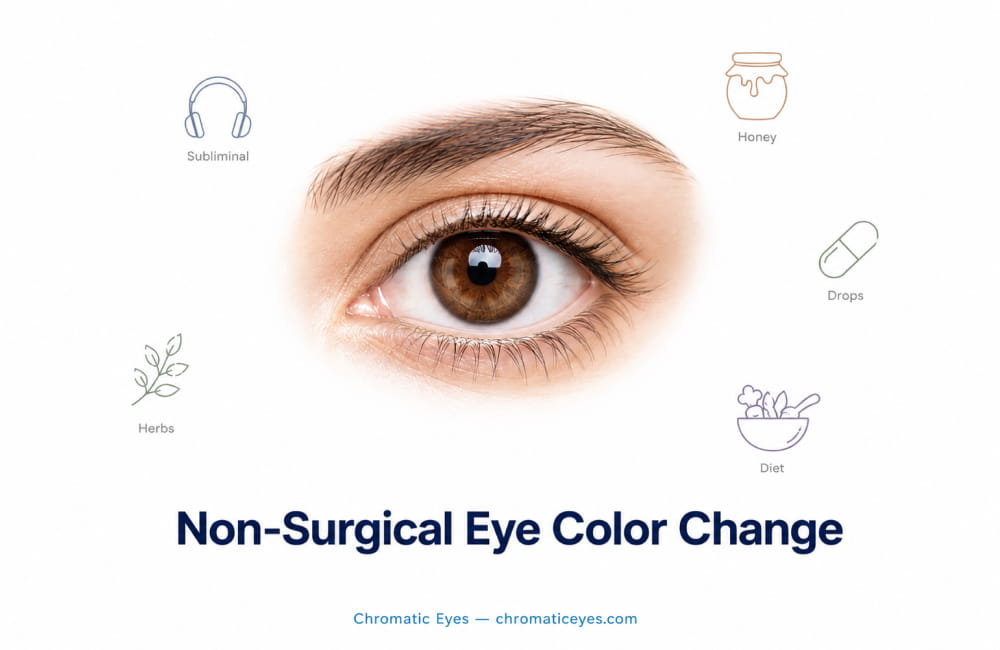
Millions of people search for ways to change their eye color without surgery. Social media is flooded with promises — subliminal audios, honey drops, superfoods, and mysterious eye drops that claim to transform brown eyes to blue or green overnight. Before you try any of them, there is something you need to understand about how eye color actually works.
Can You Really Change Eye Color Without Surgery?
Eye color is determined by the concentration of melanin in your iris — a genetically fixed pigment that forms during infancy and remains stable for life. Once your iris melanocytes mature, typically by age three to six, no external substance, sound frequency, or dietary change can alter the amount or distribution of melanin in your iris.
This is not a matter of opinion. It is basic biology confirmed by ophthalmologists worldwide, including the American Academy of Ophthalmology. The iris sits inside the eye, protected by multiple cellular layers. Nothing applied to the surface of the eye — and nothing consumed through diet — can penetrate deep enough to affect iris pigmentation.
Understanding this one fact is enough to evaluate every “non-surgical” method currently trending online.
The Most Popular Methods — And Why They Fail
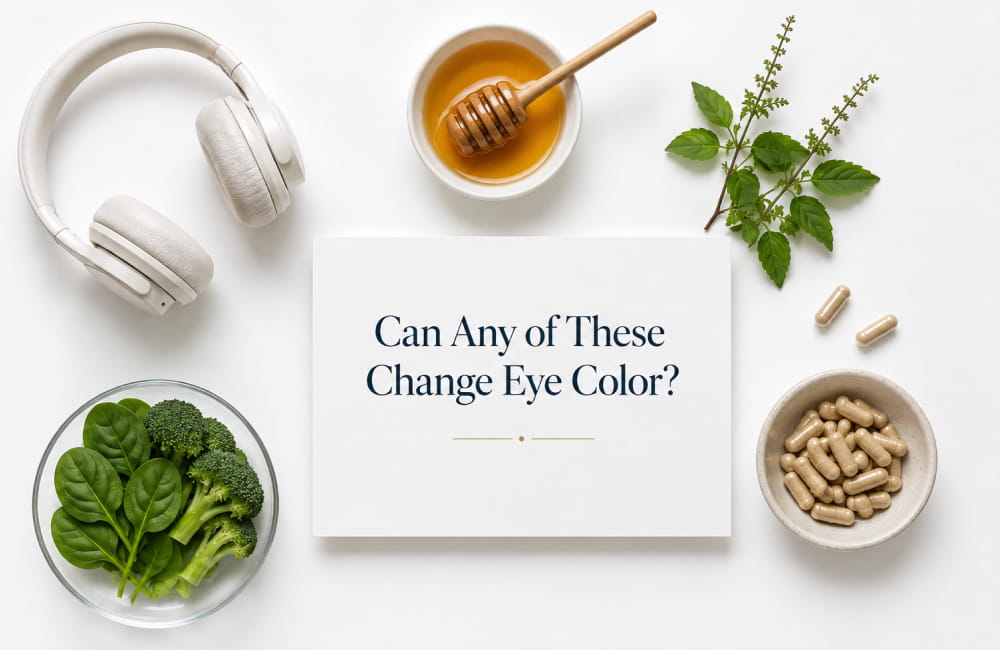
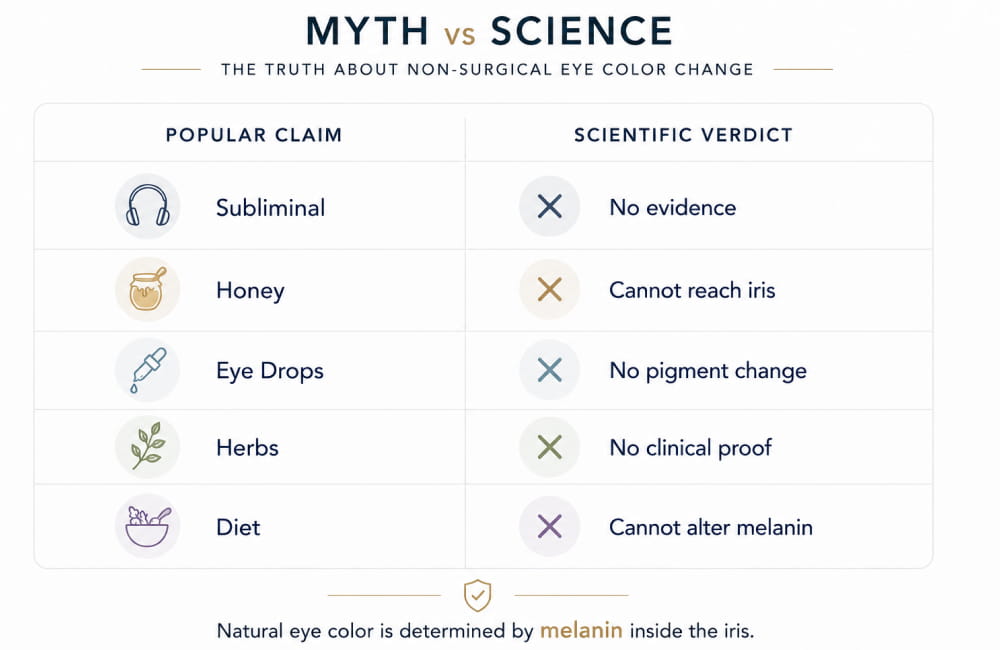
Subliminal audio and frequencies
are among the most viral trends on TikTok and YouTube, with some videos reaching tens of millions of views. The claim is that listening to specific sound frequencies reprograms the subconscious mind to alter iris pigmentation. There is no scientific mechanism by which audio signals can influence melanin production in the iris. Subliminal stimuli have been studied in psychological research, but no credible study has demonstrated any effect on physical pigmentation. The results people report are explained by changes in lighting, camera filters, or simple wishful perception.
Foods claimed to change eye color
including spinach, honey, fish, ginger, olive oil, and chamomile tea — are among the most searched topics in this category. While these foods genuinely support overall eye health, none of them interact with iris melanocytes. Dietary nutrients are metabolized through the digestive system and never reach the iris in a form that could modify melanin concentration. Before-and-after images shared online are almost always explained by lighting differences, pupil dilation, or camera exposure — not actual pigment change.
Unregulated eye color change drops
are a growing trend, particularly on TikTok. These products — sold online without medical oversight — claim to reduce melanin in the iris and lighten eye color. No such drop has received approval from any regulatory body. There is no clinical evidence that topically applied drops can alter iris pigmentation, and several documented cases have resulted in inflammation, dryness, and permanent vision damage.
Herbal remedies and meditation
round out the list of methods promoted online. Neither chamomile compresses, essential oil applications, nor visualization practices have any demonstrated effect on iris melanin. These methods are ineffective, though most carry no direct physical risk when used correctly.
When “Natural” Becomes Dangerous
Ineffective is one thing. Dangerous is another.
Applying honey directly to the eyes is one of the most persistent and harmful myths circulating on social media. Raw honey is not sterile. It can introduce bacteria, fungi, and other pathogens directly into one of the most sensitive and irreplaceable organs in the body. The American Academy of Ophthalmology has explicitly warned against this practice. Documented consequences include severe bacterial infections, corneal damage, and in serious cases, permanent vision loss.
Unregulated eye drops carry similar risks. Without sterility standards, proper pH balance, or clinical testing, these products can cause chemical burns, chronic inflammation, and irreversible damage to the corneal surface.
The eyes cannot regenerate the way other tissues can. Damage to the cornea or iris is often permanent. No cosmetic goal justifies that risk.
What Actually Works: Proven and Safe Options
If your goal is a genuine, lasting change in eye color, only two medically recognized options exist:
At Chromatic Eyes, the ETP (Eye Tunnel Painting) technique represents the most advanced form of keratopigmentation currently available. By creating precise micro-tunnels in the superficial corneal layer and filling them with biocompatible pigments, ETP produces a permanent, natural-looking color change — while preserving the limbal ring and maintaining full visual function.
Unlike the methods described above, ETP is performed under strict medical protocols by qualified ophthalmologists, with documented safety records and real patient results across a wide range of colors.
If you are seriously considering changing your eye color, the right first step is a consultation with a certified eye specialist — not a TikTok trend.