


A Comprehensive Guide to the Rarest and Most Beautiful Eyes
They say the eyes are the windows to the soul, and they are undeniably the most captivating feature of the human face. The incredible diversity of eye colors around the world paints a fascinating picture of genetics and human beauty. From warm, inviting earth tones to the rarest eye colors shrouded in mystery, the hue of your iris plays a pivotal role in defining your aesthetic signature. In this editorial guide by Chromatic, we delve into the most popular eye colors, explore the science behind what makes them attractive, and answer the ultimate question: What is truly the most beautiful eye color?
Most Popular Eye Colors by Global Percentage
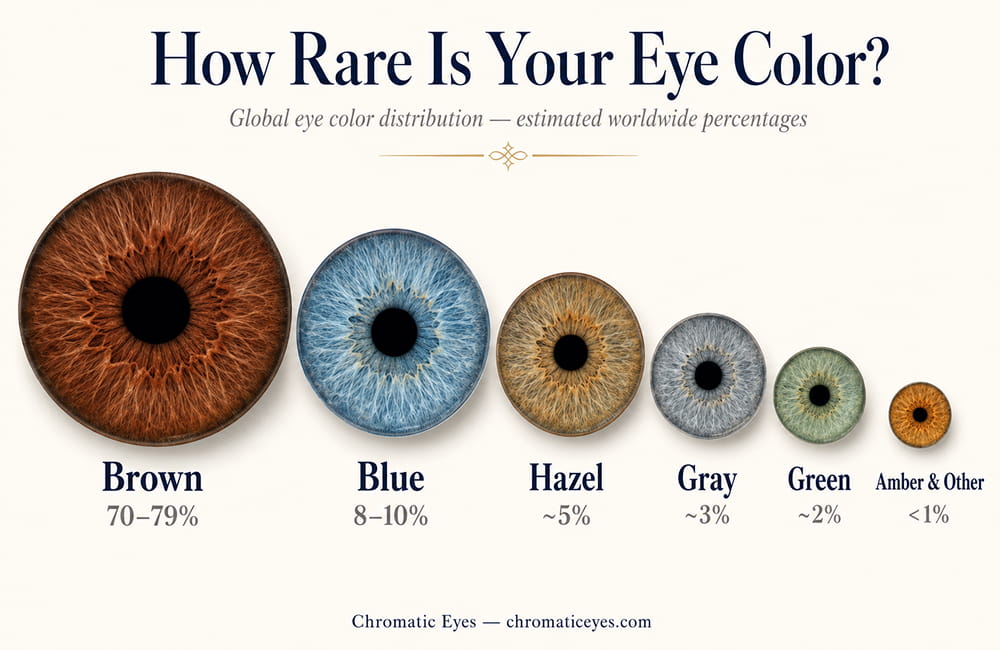
The amount and distribution of melanin in the iris dictate our eye color. Here is how the genetic lottery is distributed across the global population:
- Brown Eyes — 70% to 79%: The most common eye color worldwide. Rich in melanin, brown eyes are associated with warmth, trustworthiness, and provide the best natural protection against harsh sunlight.
- Blue Eyes — 8% to 10%: One of the most requested colors in cosmetic clinics worldwide. Blue eyes contain no actual blue pigment — the color results from Rayleigh scattering, the same optical effect that makes the sky appear blue.
- Hazel Eyes — ~5%: A dynamic blend of gold, green, and light brown that shifts appearance depending on lighting and surroundings.
- Gray Eyes — ~3%: One of the rarest and most sophisticated shades, ranging from sparkling silver to deep stormy slate.
- Green Eyes — ~2%: The rarest naturally occurring eye color. A precise combination of low melanin and a yellowish pigment called lipochrome produces this striking, highly coveted hue.
- Amber & Other Rare Colors — less than 1%: Includes solid copper/golden amber eyes and violet or reddish hues found in individuals with albinism.
The Most Attractive Eye Colors: A Blend of Charm and Genetics
While crowning the “most attractive” eye color is inherently subjective, global beauty standards and psychological studies often point to specific hues that universally captivate. Attractiveness is frequently linked to the contrast between the iris and skin tone, as well as the clarity of the color itself. Let’s explore the shades that consistently steal the spotlight:
Blue Eyes: The Classic Symbol of Beauty
Often regarded as the epitome of classic allure, blue eyes are highly sought after. Fascinatingly, there is no actual blue pigment in the human eye. The color is the result of Rayleigh scattering — the same optical illusion that makes the sky look blue. Blue eyes offer a piercing, angelic look that creates a stunning high-contrast aesthetic, making it one of the most requested colors in modern cosmetic clinics.
Hazel Eyes: A Mesmerizing Blend of Hues
For those seeking warmth and dynamic beauty, hazel eyes are a perfect masterpiece. Featuring a breathtaking blend of gold, green, and light brown, hazel eyes have the unique ability to “shift” colors depending on the surrounding lighting and clothing. This chameleon-like quality gives the wearer a vibrant, lively, and endlessly fascinating gaze.
Gray Eyes: Elegance and Mystery
Ranking high among the most sophisticated shades, gray eyes exude pure elegance. As one of the rarest eye colors, gray offers a neutral yet striking aesthetic that can range from a sparkling silver to a deep, stormy slate. Gray eyes provide an aristocratic and mysterious vibe, interacting beautifully with ambient light.
Unique and Rare Eye Colors
Beyond the standard spectrum, human genetics occasionally produce incredibly unique eye colors. Amber eyes boast a solid, glowing copper or golden hue without any flecks of green or brown — a warmth that is entirely their own. Even rarer are violet or reddish hues, typically found in individuals with albinism, where the near-absence of melanin allows the reflection of blood vessels to subtly color the iris. These extraordinary shades serve as a reminder of just how remarkable human genetic diversity truly is.
Eye Color, Attractiveness, and Cultural Symbolism
The allure of eye color isn’t just visual — it’s deeply psychological. Studies on eye color and attractiveness suggest that lighter eyes (blue and green) often grab immediate attention due to the high contrast they create against the dark pupil. Conversely, darker eyes are frequently perceived as a sign of confidence, dominance, and reliability.
Furthermore, different cultures attribute different symbolism to eye colors. In many Eastern cultures, large, dark eyes are the gold standard of authentic beauty, while Western cultures often celebrate light, bright eyes as a symbol of youthfulness and striking allure.
Can You Change Your Eye Color Safely?
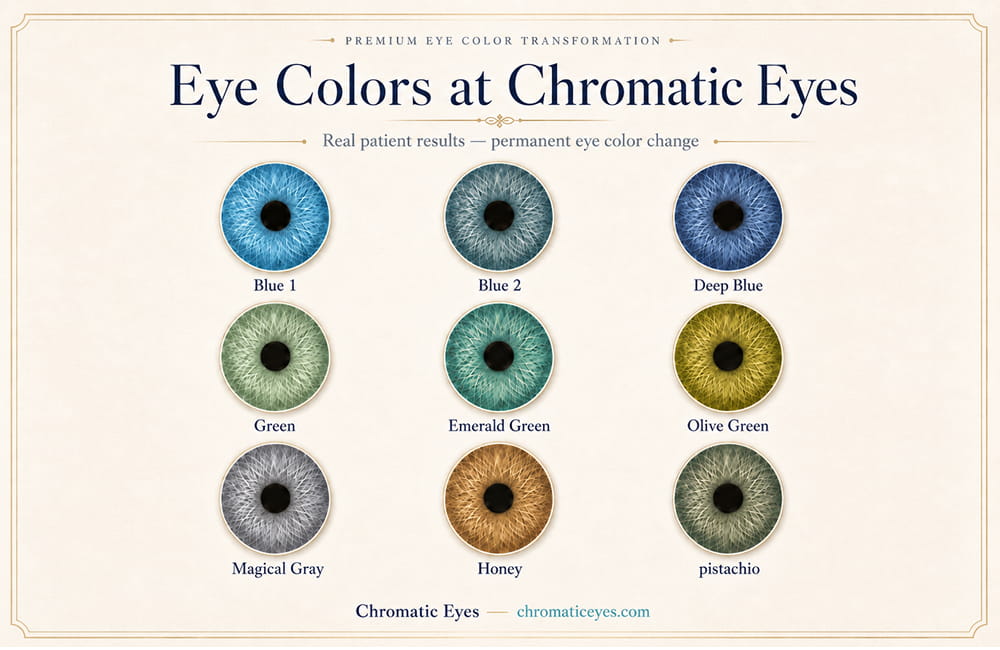
For centuries, the color you were born with was the color you kept. Today, millions are asking: can you change your eye color permanently? The answer is a resounding yes — and it can be done safely. Permanent eye color change is now medically possible through two established procedures: laser depigmentation and keratopigmentation. Unlike cosmetic contact lenses, these techniques offer lasting results without daily maintenance.
At Chromatic Eyes, the exclusive ETP (Eye Tunnel Painting) technique — the safest and most refined generation of keratopigmentation — allows precise color selection, whether it is a deep French Blue, an Emerald Green, or a Golden Hazel. By precisely preserving the natural Limbal Ring and using bio-compatible pigments, the result seamlessly complements your features without ever looking artificial.
If you are considering a permanent change, a consultation with a qualified ophthalmologist is the recommended first step.
The Bottom Line: Your Beauty, Your Choice
Whether you embrace the warm reliability of common brown eyes or desire the striking rarity of green, true beauty lies in harmony and confidence. At Chromatic, we are here to guide you through the fascinating world of ocular aesthetics, providing the safest, most advanced medical techniques to help you reveal the most beautiful version of yourself.