

Iris implantation surgery is one of the most controversial procedures used for permanent eye color change. Originally developed to help patients with severe iris defects and traumatic eye injuries, the technique was later adopted for cosmetic purposes. However, concerns about safety, long-term complications, and vision preservation have led many ophthalmologists to question its use as an elective cosmetic procedure.
If you are considering iris implantation or researching its potential risks, it is important to understand how the procedure works, the complications that have been reported, and why many specialists now recommend exploring safer alternatives.
What Is Iris Implantation Surgery?
Iris implantation surgery is a procedure that changes eye color by placing a colored artificial iris inside the eye. Although originally developed for patients with certain iris defects and traumatic eye injuries, the technique later gained attention as a cosmetic method for permanent eye color change.
Why Was Iris Implantation Originally Developed?
Iris implants were initially designed for medical purposes rather than cosmetic enhancement. They were used to help patients with conditions such as aniridia, iris defects, or severe eye trauma that affected the appearance and function of the natural iris.
What Are the Risks of Iris Implantation?
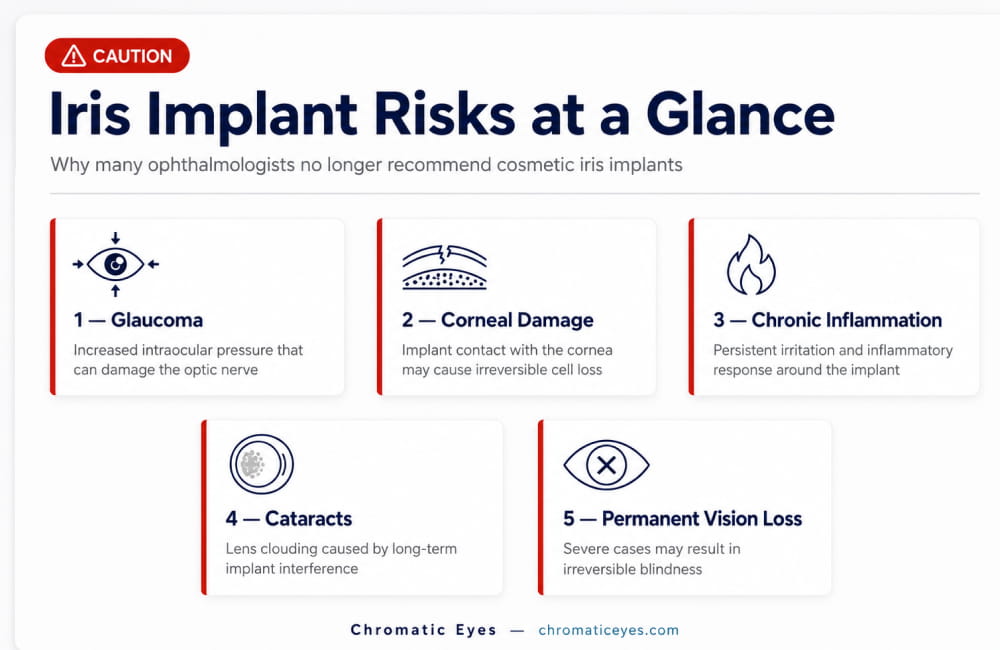
Although iris implantation can permanently change eye color, the procedure has been associated with several serious complications. Because the implant is placed inside the eye, it may interfere with normal ocular structures and increase the risk of long-term vision problems.
Potential complications include glaucoma, corneal damage, chronic inflammation, cataracts, and, in severe cases, permanent vision loss.
Can Iris Implants Cause Blindness?
Yes, severe complications from cosmetic iris implants can lead to significant vision impairment and, in rare cases, permanent blindness. For this reason, many ophthalmologists consider cosmetic iris implantation a high-risk procedure and do not recommend it for aesthetic purposes.
Why Many Specialists No Longer Recommend Iris Implants
Over the past decade, growing concerns about long-term safety have led many eye specialists to discourage the cosmetic use of iris implants. The potential for serious complications, combined with the availability of less invasive alternatives, has significantly reduced the popularity of this procedure in modern ophthalmology.
What Are the Alternatives to Iris Implantation?
As concerns about iris implant safety have increased, many patients have turned to alternative eye color change procedures. Modern approaches such as laser eye color change and keratopigmentation or ETP were developed to avoid placing an artificial implant inside the eye and are generally considered less invasive than cosmetic iris implantation.
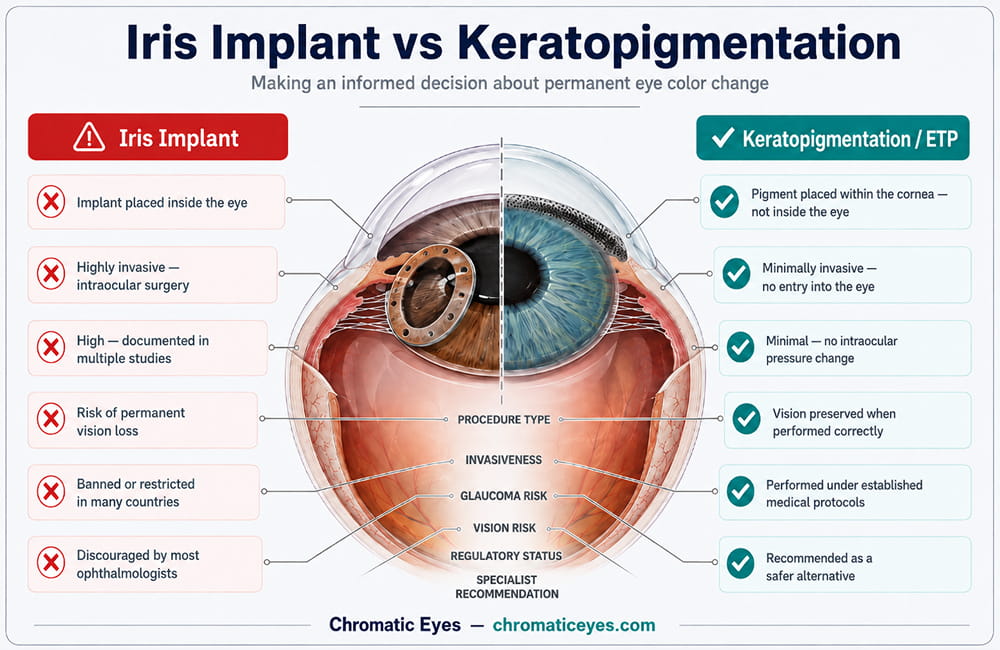
Patients interested in permanent eye color change should consult an experienced ophthalmologist to determine which option is most appropriate for their individual circumstances.
Frequently Asked Questions
Is iris implantation safe?
Iris implantation is associated with significant risks and is considered controversial by many eye specialists.
Can iris implants cause blindness?
Severe complications may lead to permanent vision loss in some cases, which is one reason many specialists discourage cosmetic iris implantation.
Why was iris implantation originally developed?
The procedure was originally created to help patients with iris defects, aniridia, and certain traumatic eye injuries.
What are the alternatives to iris implantation?
Alternative options include laser eye color change and keratopigmentation (ETP), depending on individual eye health and treatment goals.