

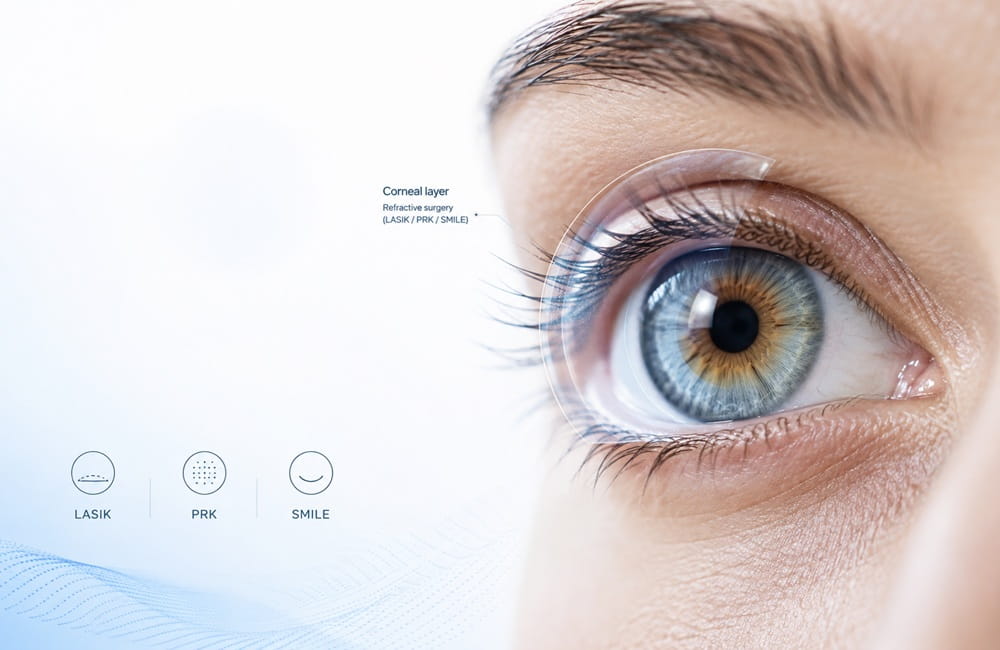
Having LASIK, PRK or SMILE does not automatically rule out every form of permanent eye color change. The answer depends on two separate factors: the refractive procedure you previously had and the eye color change method you are considering.
This distinction is essential. Keratopigmentation places pigment within the cornea, while laser eye color change reduces pigment in the iris. Because LASIK, PRK and SMILE reshape the cornea differently, previous vision correction has a more direct impact on planning keratopigmentation.
Can You Change Eye Color After LASIK, PRK or SMILE?
In selected cases, yes—but not every combination is appropriate.
At Chromatic Eyes, the general approach is:
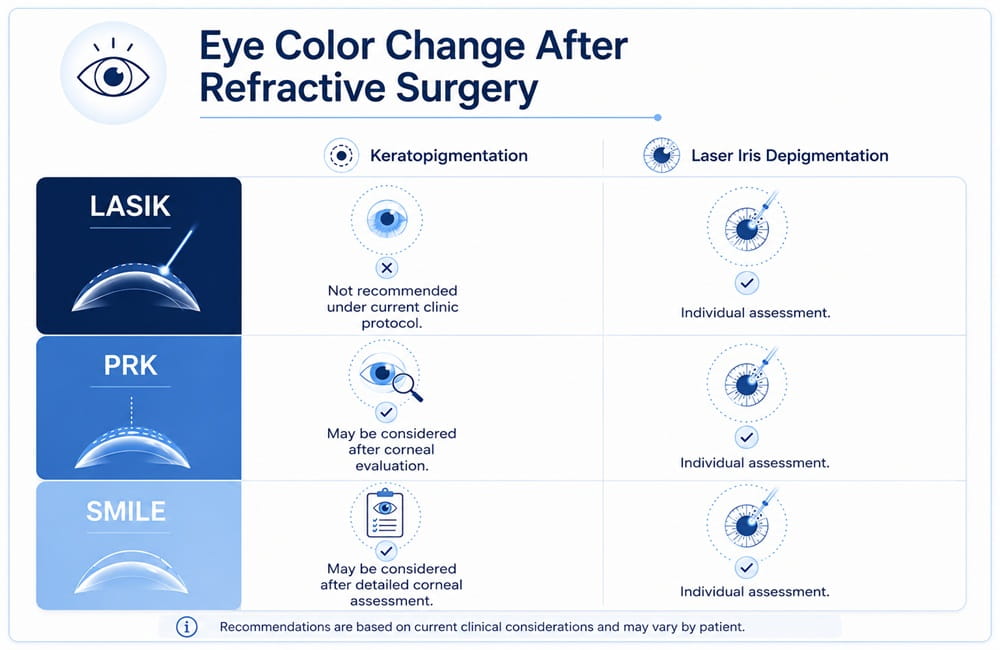
- After LASIK, keratopigmentation is not recommended because a corneal flap already exists. Laser iris depigmentation may still be assessed separately.
- After PRK, either eye color method may be considered if healing is complete and the eye passes the required examinations.
- After SMILE, either method may be evaluated individually, although the location and depth of the previous corneal treatment must be reviewed before keratopigmentation.
Clear vision after refractive surgery does not by itself confirm eligibility. Corneal imaging, ocular surface health and previous surgical details remain important.
How LASIK, PRK and SMILE Affect the Cornea
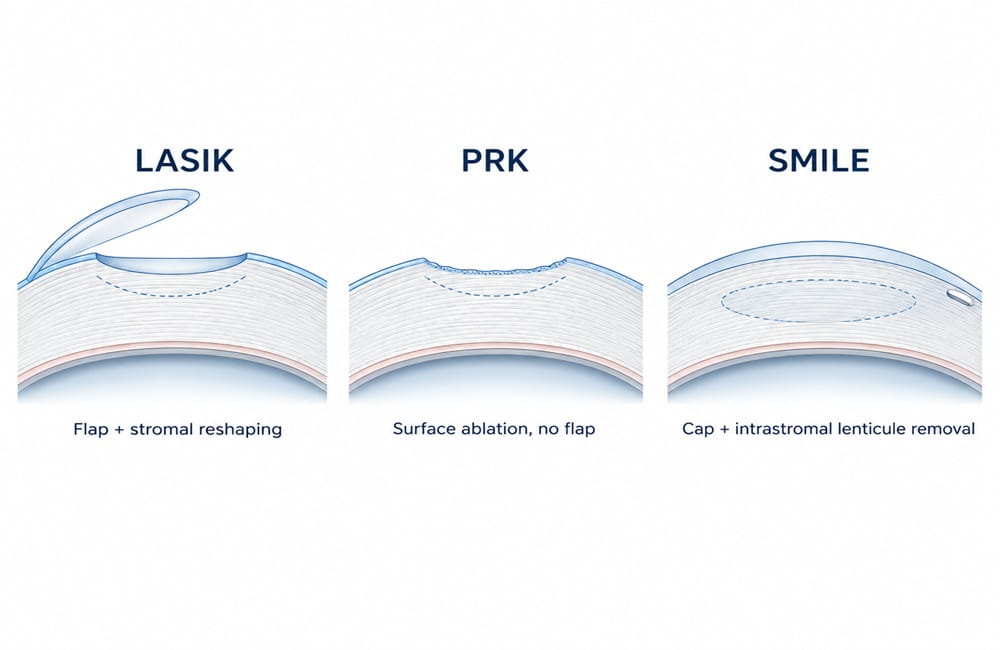
LASIK creates a corneal flap and reshapes stromal tissue beneath it. PRK reshapes the anterior cornea without creating a flap; the surface epithelium is removed and later regenerates. SMILE uses a femtosecond laser to create a stromal lenticule, which is removed through a small incision.
These differences matter because keratopigmentation also involves a specific corneal layer. The surgeon must know where previous tissue changes occurred before planning another corneal procedure.
Eye Color Change After LASIK
Keratopigmentation After LASIK
Keratopigmentation is not recommended after LASIK under the current Chromatic Eyes protocol. The concern is the pre-existing flap and the need to avoid unsuitable or overlapping treatment planes in an already altered cornea.
A medium- and long-term study of cosmetic keratopigmentation reported one case of corneal ectasia in a patient with previous LASIK. One case does not mean the same complication will occur in every post-LASIK patient, but it supports a cautious approach.
Laser Eye Color Change After LASIK
This laser-based option must be considered separately. It targets pigment on the anterior iris rather than placing pigment inside the cornea, so previous LASIK does not create the same anatomical issue as it does for keratopigmentation.
A complete examination is still required, including assessment of the cornea, eye pressure, anterior chamber, iris and overall ocular stability.
Eye Color Change After PRK
PRK does not create a permanent flap, but it still removes corneal tissue and produces a healing response at the surface and anterior stroma.
Keratopigmentation after PRK may be considered when healing is complete, refraction is stable and tomography shows a regular, structurally suitable cornea. The surgeon should also check for haze, irregularity or reduced thickness.
The laser-based method may also be evaluated after PRK because its primary target is the iris. Previous PRK must still be disclosed, and the entire eye should be assessed.
Eye Color Change After SMILE
SMILE is flapless, but it still changes the internal corneal structure. A femtosecond laser creates a lenticule within the stroma, leaving a corneal cap above the treated plane.
Keratopigmentation after SMILE may be possible in selected patients, but the original cap thickness, treatment diameter, stromal interface and current tomography should be reviewed. Being “flapless” does not mean another intrastromal procedure is automatically suitable.
Laser eye color change can be assessed separately after SMILE, based on current eye health.
Can You Have Keratopigmentation After Vision Correction Surgery?
The answer depends strongly on the previous procedure.
| Previous procedure | Keratopigmentation | Laser eye color change |
| LASIK | Not recommended under the clinic’s current protocol because of the existing flap | May be assessed separately |
| PRK | May be considered after complete healing and corneal evaluation | May be considered after a full examination |
| SMILE | May be considered individually after reviewing the cap and stromal treatment plane | May be considered after a full examination |
This is a general clinical pathway, not an individual treatment decision. For procedural details, visit the Keratopigmentation and Laser Eye Color Change service pages.
What Tests Are Needed Before Eye Color Change?
The evaluation may include:
- Corneal topography or tomography
- Pachymetry to measure corneal thickness
- Slit-lamp examination
- Ocular surface and dry-eye assessment
- Refraction and visual stability
- Eye-pressure and anterior chamber assessment, particularly before iris depigmentation
- Review of previous surgical records
- A complete eye-health examination when indicated
Normal visual acuity does not replace these tests. Structural abnormalities can exist even when eyesight remains good.
How Long Should You Wait After LASIK, PRK or SMILE?
There is no universal waiting period.
Timing depends on the previous surgery, healing response, refractive stability, ocular surface recovery and corneal imaging. The relevant question is not simply whether a set number of months has passed, but whether the eye is stable and the proposed method is compatible with its current anatomy.
Which Should Come First: Eye Color Change or Vision Correction?
The sequence depends on the eye color change method.
If You Want Keratopigmentation and Vision Correction
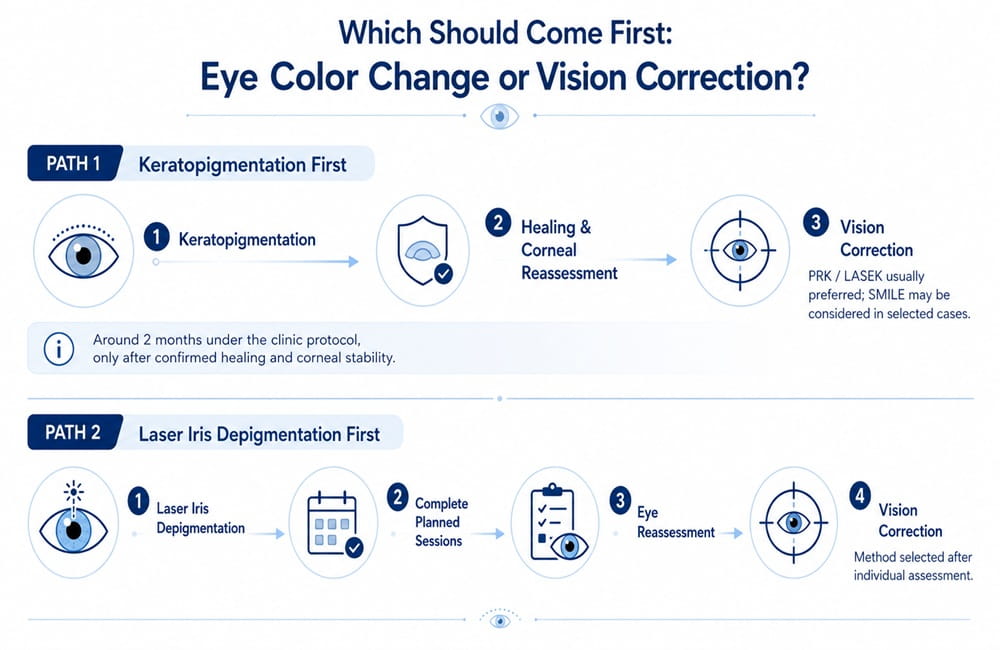
Under the Chromatic Eyes protocol, keratopigmentation is generally performed first. After healing, repeat imaging is used to decide when and how vision correction can be performed.
Refractive surgery is generally considered around two months later, provided healing is complete and the cornea is stable. PRK or LASEK are usually preferred because they do not create a LASIK flap. SMILE may also be considered in selected cases after reviewing the pigment layer and proposed lenticule depth.
The two-month interval is not automatic clearance. Some patients may need longer or may not be suitable for a second corneal procedure.
If You Want Laser Eye Color Change and Vision Correction
Laser iris depigmentation is generally completed first. Once the planned sessions are finished and the eye is stable, the patient is reassessed for vision correction.
Because this method targets the iris rather than creating a pigmented corneal tunnel, the refractive procedure is chosen through a separate assessment of the cornea, eye pressure, iris response and overall ocular health.
Who May Need Extra Evaluation?
Additional caution may be required in patients with:
- Thin or irregular corneas
- Abnormal topography or tomography
- Suspected keratoconus or corneal ectasia
- Significant dry eye
- Corneal haze, scarring or previous complications
- Multiple refractive procedures
- Unstable vision or refraction
- Elevated eye pressure or abnormal anterior chamber findings
- Incomplete previous surgical records
These findings do not always produce an automatic “no,” but they can make a particular method unsuitable.
Final Assessment Before Eye Color Change
Previous LASIK, PRK or SMILE must be part of the treatment decision.
The main conclusions are:
- LASIK does not automatically rule out laser iris depigmentation, but keratopigmentation is not recommended under the current Chromatic Eyes protocol.
- PRK and SMILE may be compatible with keratopigmentation in selected patients after detailed corneal evaluation.
- Laser eye color change must be assessed separately because it targets the iris.
- When a patient wants both keratopigmentation and vision correction, keratopigmentation is generally performed first.
- No procedure or waiting period should be approved without individual examination and imaging.
The safest answer comes from matching the previous surgery, current anatomy and intended eye color method in one personalized plan.
Frequently Asked Questions
Keratopigmentation is not recommended after LASIK under the current Chromatic Eyes protocol because LASIK leaves a corneal flap. Laser iris depigmentation may still be considered separately after examination.
Possibly. Keratopigmentation may be considered after complete healing and confirmation of corneal stability. Laser eye color change may also be assessed separately.
It may be possible in selected patients. The surgeon must evaluate the SMILE cap, stromal treatment plane, corneal thickness and tomography.
Yes. Topography or tomography and thickness measurements are particularly important after PRK, SMILE or other corneal surgery because they can reveal structural findings that visual acuity alone cannot show.