

Changing brown eyes to gray is possible through medical eye color change procedures, primarily keratopigmentation and laser iris depigmentation.
Keratopigmentation allows a gray shade to be selected before treatment, while laser gradually reduces natural iris pigment and offers less control over the final color. The right option depends on your eye health, desired appearance and specialist assessment.
Can Brown Eyes Be Changed to Gray?
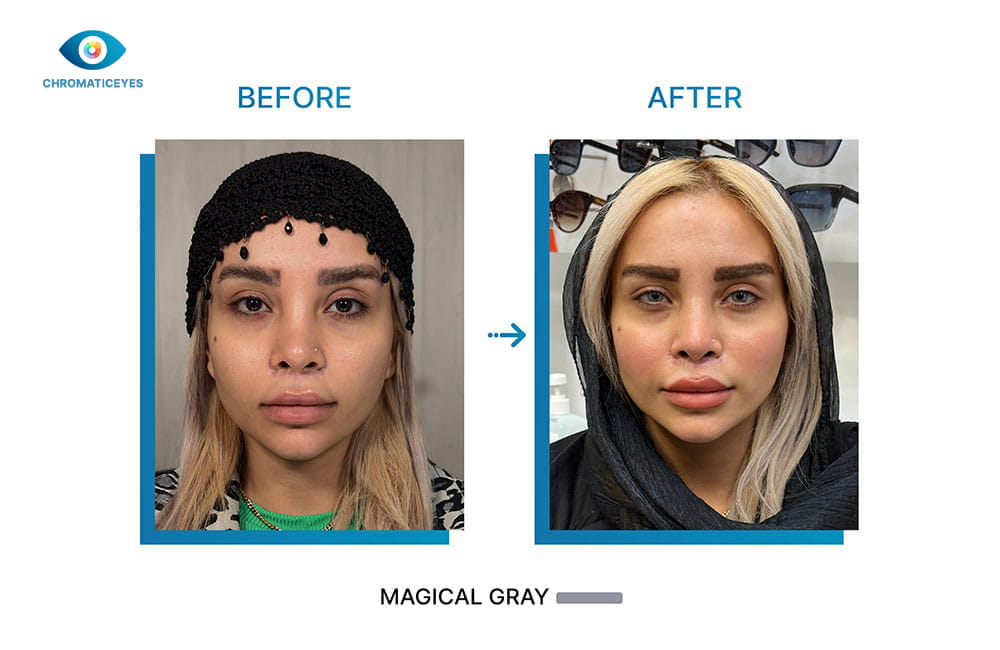
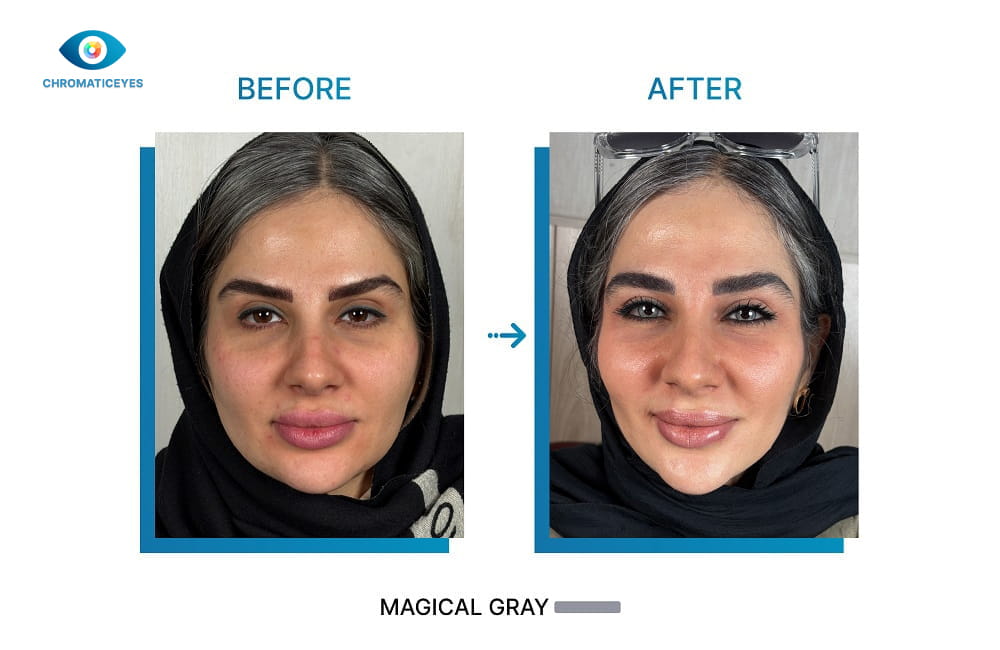
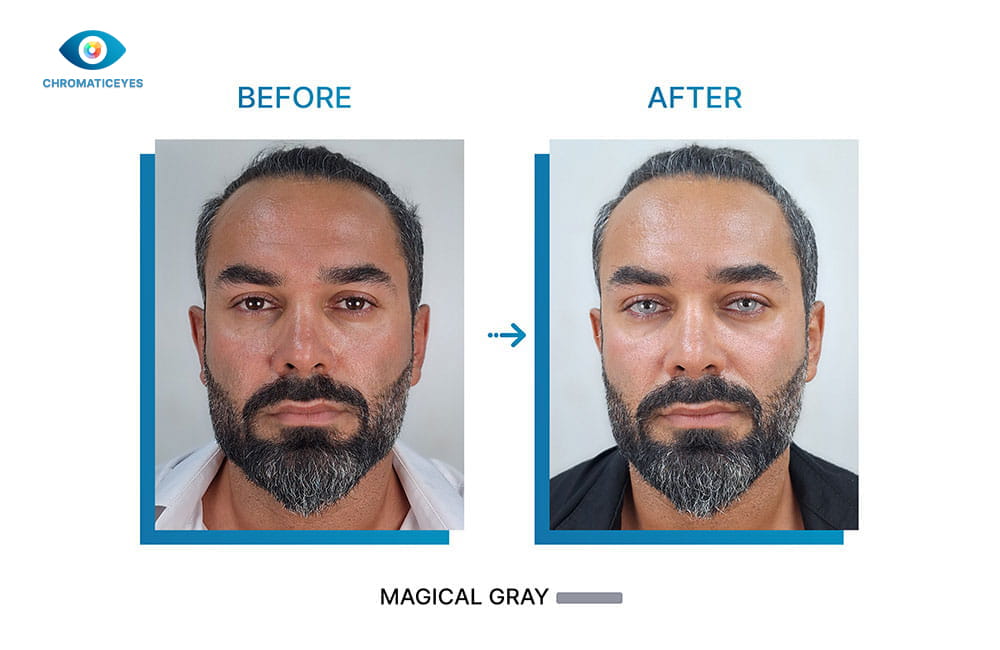
Yes. Brown eyes can be given a lasting gray appearance through medical eye color change procedures.
Keratopigmentation places medical pigment within the corneal stroma, allowing a selected gray shade to be planned in advance. Laser depigmentation instead gradually reduces iris pigment, lightening the eye without the same control over a specific result.
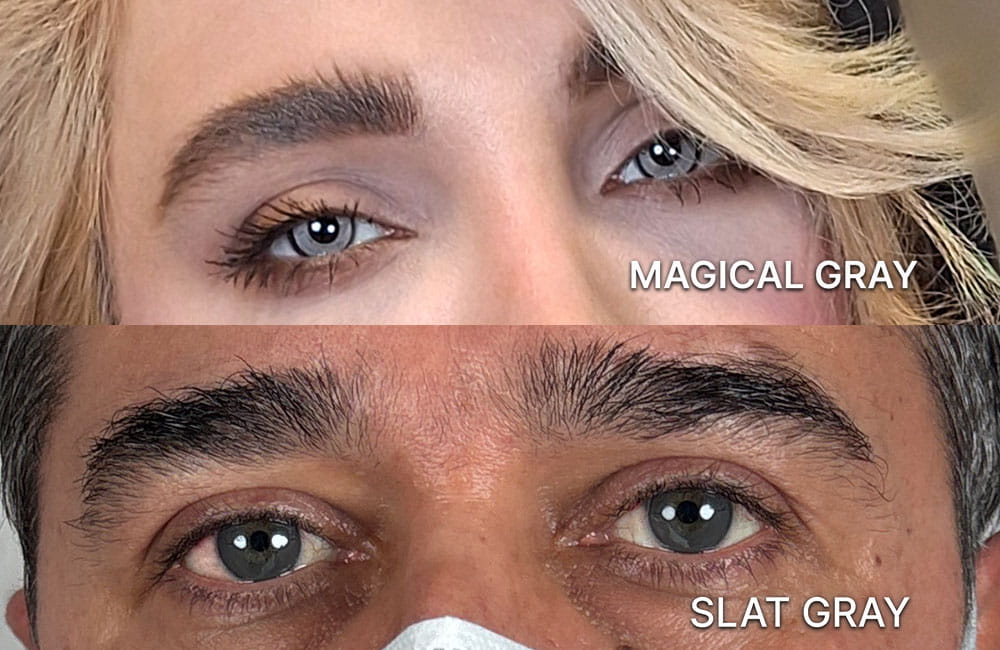
For anyone seeking Magical Gray or Slate Gray, this difference in color control is particularly important.
Why Gray Eyes Look Gray
Natural eye color depends mainly on iris pigmentation and how light interacts with the iris structure. Gray eyes generally contain relatively low levels of iris pigment, allowing light scattering to contribute more strongly to their appearance.
Depending on lighting, natural gray eyes may appear more silver, blue-gray or green-gray.
Keratopigmentation(ETP): Changing Brown Eyes to a Selected Gray Shade
Keratopigmentation offers greater control when the goal is a specific gray appearance.
Selected biocompatible pigment is placed within a precisely created channel in the corneal stroma rather than removing natural iris pigment. Because the shade is chosen beforehand, the result can be planned toward a defined gray tone.
The color is visible after the procedure and continues to settle during healing.
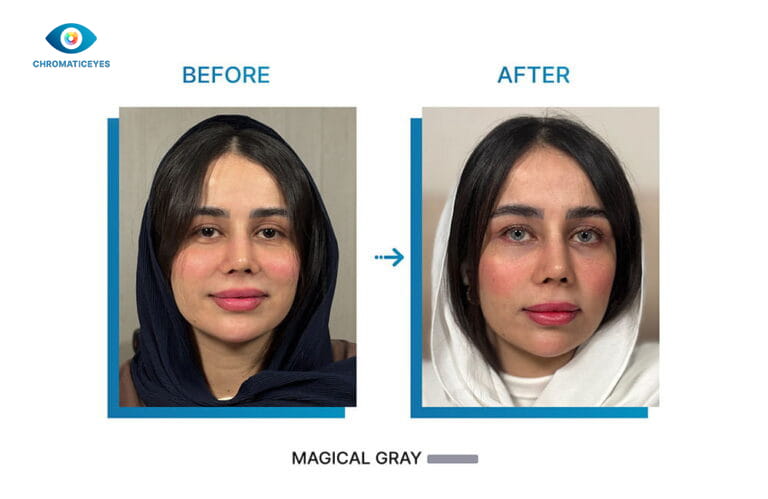
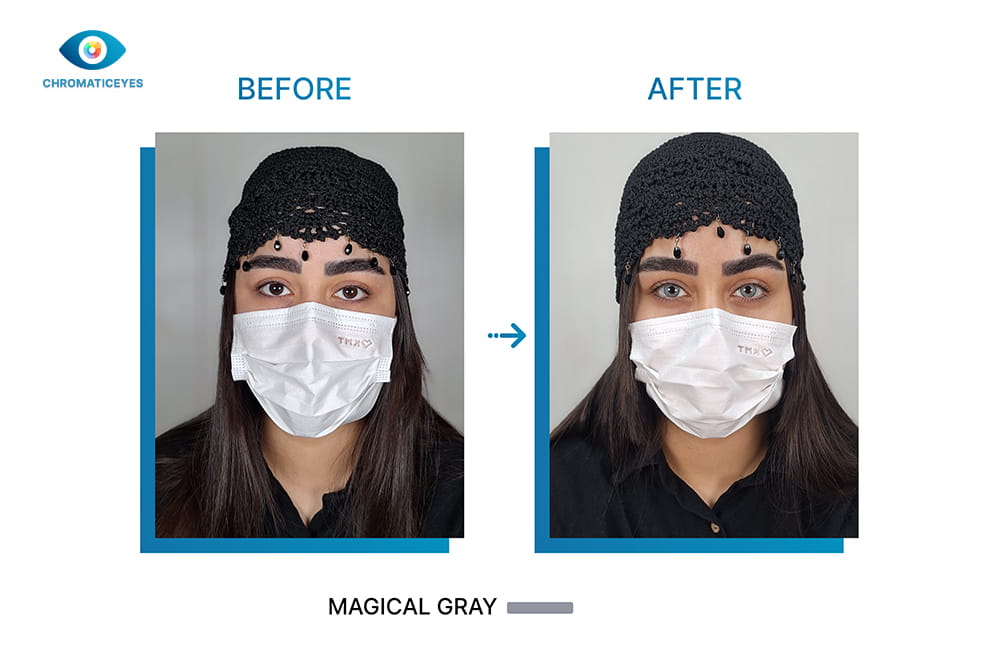
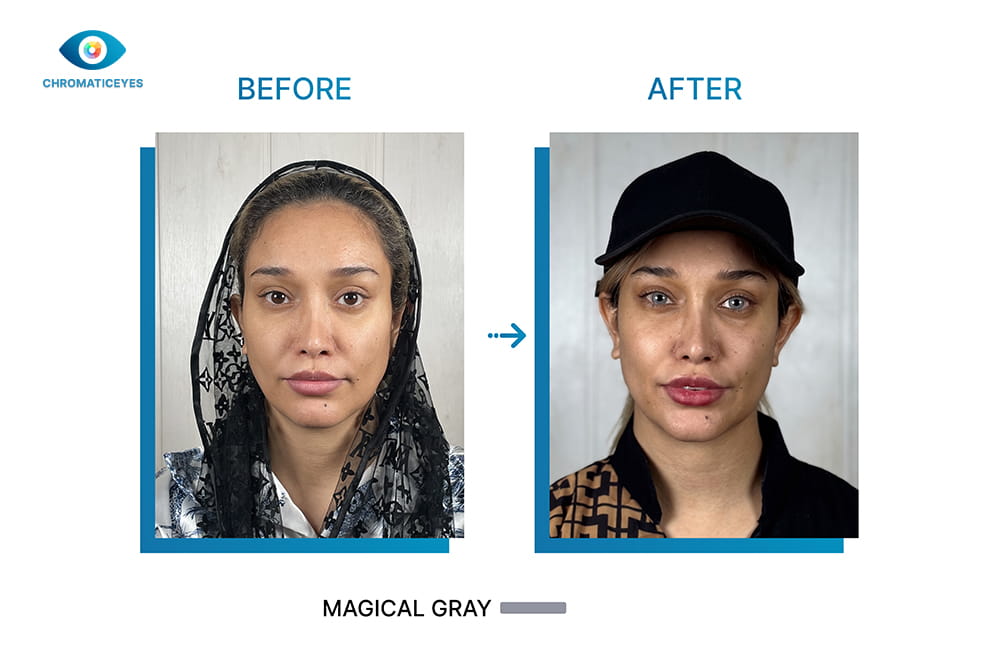
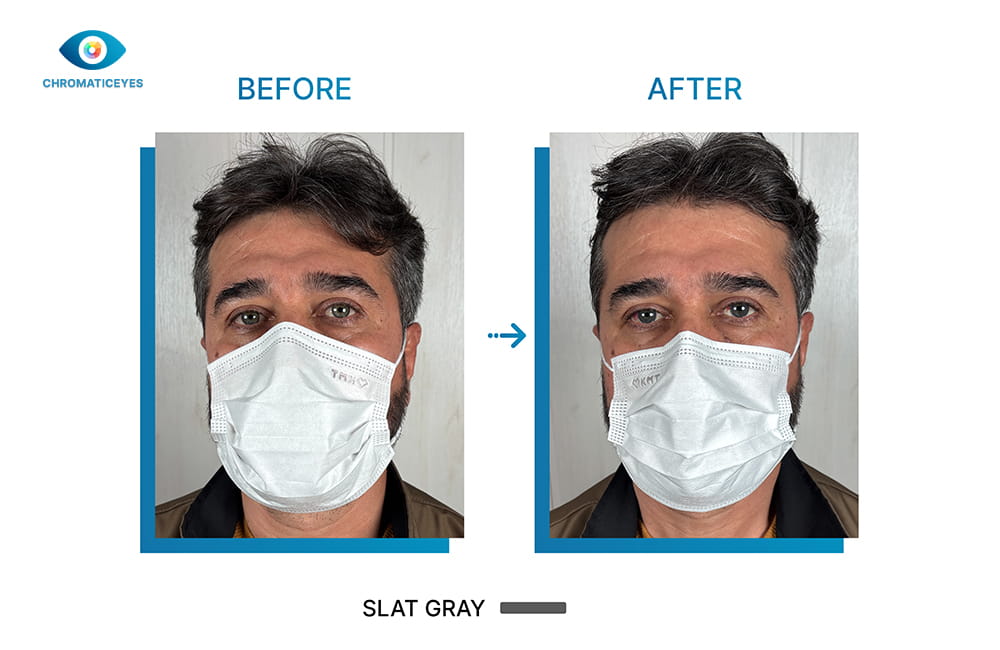
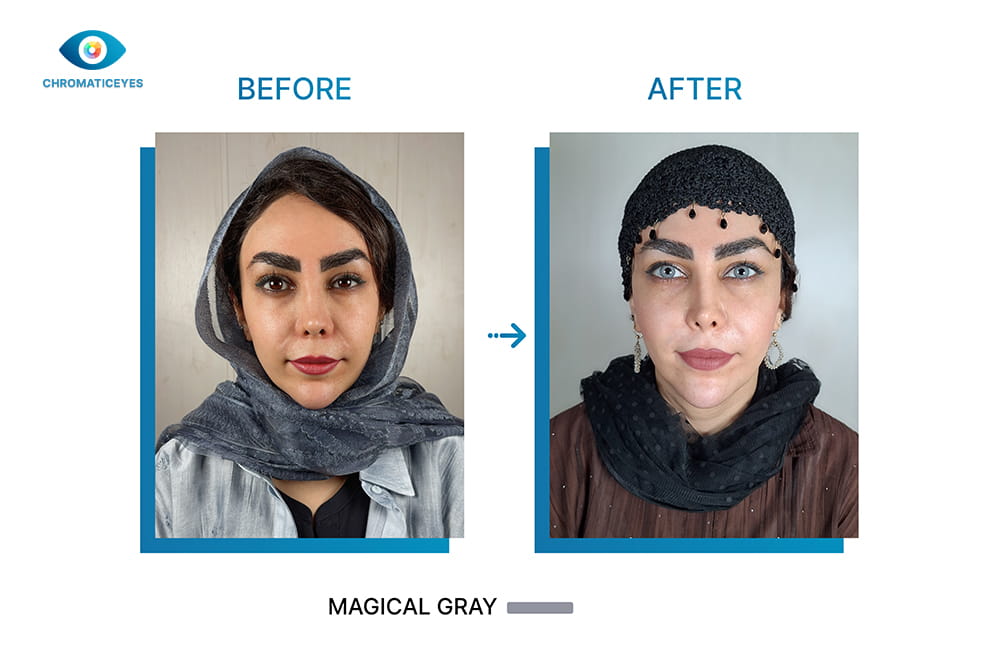
Magical Gray and Slate Gray
Chromatic offers two distinct gray shades:
- Magical Gray: A lighter, luminous gray with cool, subtly silvery undertones that can appear brighter in stronger light.
- Slate Gray: A deeper, cooler gray with stronger contrast and a more defined appearance.lighting. It is the perfect choice for an ethereal, captivating look.
Because the same shade can look slightly different depending on facial features, skin tone and lighting, color simulation and consultation are important before the final choice.
Laser Eye Color Change: Can Brown Eyes Become Gray?
Laser iris depigmentation follows a different path. Rather than adding pigment, the laser gradually reduces melanin in the anterior iris, allowing the natural eye color to become lighter.
The final appearance depends on the individual iris and its response to treatment. Unlike keratopigmentation, laser does not allow a specific shade such as Magical Gray or Slate Gray to be selected in advance.
Keratopigmentation vs. Laser for Brown-to-Gray Eye Color Change
The main difference is whether selecting a gray shade in advance or gradually lightening the natural iris is the priority.
| Keratopigmentation | Laser Depigmentation | |
| How it works | Pigment is placed within the corneal stroma | Laser reduces pigment in the anterior iris |
| Gray shade selection | Magical Gray or Slate Gray can be planned | Exact final shade cannot be selected |
| Result timeline | Visible after treatment; settles during healing | Develops gradually |
| Treatment approach | Typically one procedure | Usually a series of treatments |
| Main advantage | Greater shade control | Lightens the natural iris |
| Main limitation | Requires suitability assessment and a corneal procedure | Less control over final color |
What About Cosmetic Iris Implants?
Chromatic does not offer cosmetic iris implant surgery because published medical literature has documented serious ocular complications, including glaucoma and corneal endothelial damage.
Our cosmetic eye color assessments instead focus on keratopigmentation and laser depigmentation.
Can Brown Eyes Turn Gray Naturally?
Brown eyes may sometimes appear lighter or more gray under certain lighting conditions, but this does not mean iris pigmentation has permanently changed.
In adults, natural iris pigmentation is generally stable, and there is no proven natural method that permanently turns brown eyes gray.
Who May Be a Candidate?
Suitability is determined through an eye examination rather than by eye color alone. The ophthalmologist evaluates factors such as corneal health, the anterior segment of the eye, previous eye procedures and any condition that could affect treatment planning.
This assessment helps determine which available approach is appropriate for the individual patient and their desired result.
Recovery and Aftercare
After keratopigmentation, temporary light sensitivity, tearing, irritation or mild discomfort may occur during early recovery. Patients should use prescribed eye drops, avoid rubbing their eyes and attend scheduled follow-up examinations.
Experience and Medical Oversight
At Chromatic, keratopigmentation procedures are performed under the care of Prof. Mahmoud Jabbarvand, a corneal and anterior segment surgeon with extensive academic and surgical experience.
His background includes ophthalmic teaching and research, leadership roles at Farabi Eye Hospital, and service as President of the Iranian Society of Ophthalmology.
For every patient, planning considers both the desired color and the health of the eye before treatment is recommended.
Discuss your eye health, preferred gray shade and available options with our medical team.
The Bottom Line: Choosing the Right Path to Gray Eyes
Changing brown eyes to gray is possible through more than one medical approach.
If your priority is a specific shade such as Magical Gray or Slate Gray, keratopigmentation offers greater control over the planned color. If you prefer to gradually lighten your natural iris without selecting a precise shade, laser depigmentation follows a different path.
An eye assessment is the next step in determining which option may suit your eyes and aesthetic goal.
Ready to explore your gray-eye options?
Frequently Asked Questions
A lasting brown-to-gray appearance can be achieved through medical procedures. Keratopigmentation creates a planned gray appearance, while laser depigmentation gradually lightens the natural iris.
Yes. With keratopigmentation, the desired shade can be selected before treatment. Magical Gray is lighter and more luminous; Slate Gray is deeper and more defined.
Keratopigmentation uses topical anesthetic eye drops, so significant pain during the procedure is not typically expected. Mild temporary discomfort, tearing or light sensitivity may occur afterward.
Keratopigmentation is typically planned as one procedure, while laser depigmentation usually involves multiple treatment sessions. The treatment plan is determined after examination.
Medical References
Surgical Techniques for Cosmetic Eye Color Change: A Narrative Review — Ophthalmology and Therapy, 2025.
Cosmetic Change of the Apparent Color of the Eye: A Review on Surgical Alternatives, Outcomes and Complications — Ophthalmology and Therapy, 2022.
Molecular and Biochemical Mechanisms of Human Iris Color: A Comprehensive Review — Journal of Cellular Physiology, 2020.
An Updated Comprehensive Review on Keratopigmentation — 2025.